
What's Up With Lunging?


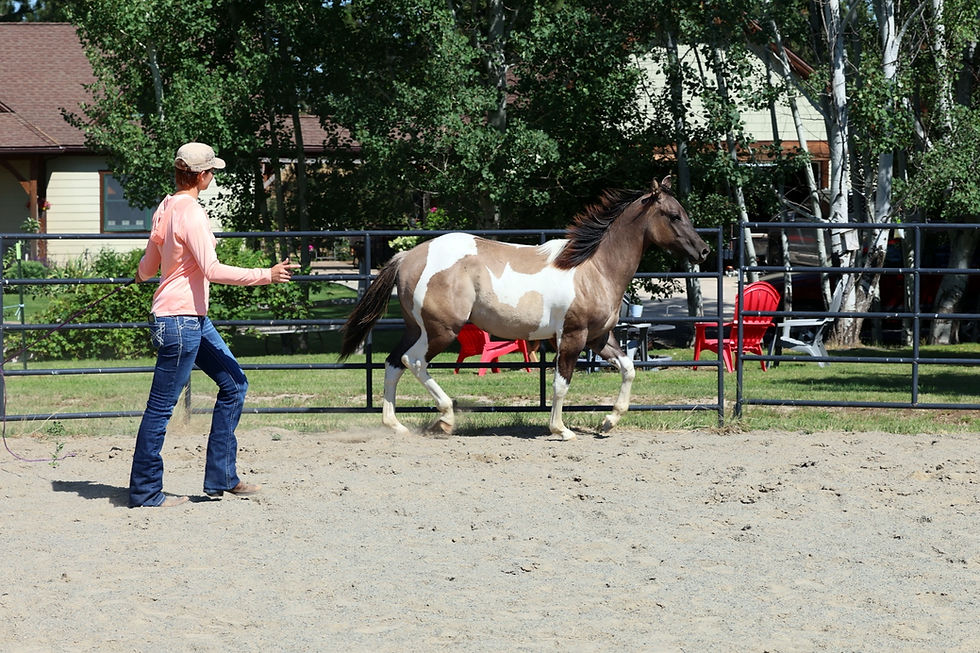
What place should lunging have in your groundwork routine? Lunging is one of those controversial things that people tend to have a love or hate relationship with. Many riders (especially in the English world) are big fan of lunging a horse before they ride. But with the rise of natural horsemanship, there were many riders and trainers who felt lunging was antiquated or pointless, switching it out for round pen work, "circle game", or some other version of circular based groundwork with a fancy name . So the question becomes, does lunging still have a use for the modern horse and rider, or is it a relic of the past?
Well, let's start with looking at the benefits of lunging. Lunging can be a great way to exercise your horse, when you don't have time to do a full ride. It can allow you to develop a horse's balance and bend in their gaits from the ground, where it is easier for them to figure things out without a rider on their back. It can also be a good way to warm your horse up and check in on their energy levels before you hop on them. Some might argue having a horse that is comfortable on a lunge line is a critical skill for a horse that may be ridden by beginners, so they can be lunged while a new rider is learning the ropes. Lunging can be a tool to develop a horse's respect and responsiveness to cues. It can also can be a piece of the puzzle if you want to train a horse to long line or ground drive.
Ok, so we've looked at some of the benefits of lunging, but what makes it so controversial? Some trainers use lunge line works as a cop out to real training. They (or more likely their assistant) lunge the horse for thirty minutes a day and call it good. This can condition a horse (so it's not all bad), but the horse isn't learning very much otherwise. Excessive lunging and tight circle work with a horse (particularly at young age) can cause musculoskeletal and joint damage. The horse can also get irritated with the repetitive and monotonous work and develop a bad attitude. Then you have the people who allow the horse to drag them around on the lunge line to a point where things can get dangerous. No one likes dealing with an out of control horse flying around on at the end of a thirty foot line. Many people use lunging simply as a way to tire the horse out before they ride, which works to a point, until your horse gets more and more conditioned and fit. Then you find yourself tiring them out for longer and longer before you can actually get on them. Another common complaint is the handler may get dizzy if the horse is continuing in repetitive circles for a long period of time.
One alternative to lunging is round penning, which allows the horse more freedom of movement. This way if they act up/have energy, you aren't tied them with a line. You can also do things with them when they are loose that you can't when they are on a line. Outside turns, teaching them to draw to you at liberty, and developing a complete shut down cue with your horse (AKA you quit and they quit). RP work can be a starting point that builds into more extensive liberty work.
Another alternative that I mentioned above is Pat Parelli's circle game. This is where you stand in one spot and send the horse around you without moving your feet or pivoting your body. There is a certain amount of tool coordination that is required to do this which can be good practice for the handler. It can also alleviate the dizziness concerns! The goals of circle game are a bit different than the goals of traditional lunging. The idea is for you to manage less and your horse to manage themself more. Can your horse maintain gait, direction and focus without being micro-managed? It can be a check in to see if your horse understands their job.
Clinton Anderson is another popular trainer who has come up with his own circular groundwork exercise as part of his training method. He calls it lunging for respect. As the name implies, this style of lunging is about controlling the feet to develop your horse's respect for you, your cues, and your personal space. The idea is not to wear your horse out with hundreds of circles but to request forward movement from the horse and then change directions frequently, interrupting their thought process with each change until they are really focused on you and responsive to what you are asking.
The fact is most trainers out there have some version of lunging and/or circular groundwork as a part of their program. Some people want the horse loose; some want them on a line. Some people may use a cavesson and a thirty foot lunge line, others a 12 foot rope with a stick and string. Some may prefer to use a flag and others a stock whip or a lunge whip. There's different ways to move your horse in a circle, but ultimately we're all doing very similiar things. Why? Because it works. My personal take on lunging is this, it is a valuable tool if you know how to use it. Be intentional with it. Have an end goal in mind. Don't just run your horse in mindless circles to tire them out. Don't spend so much time lunging your young horse that cause damage to their body. Don't use it as a cop out to real training. But do use it for all the incredible benefits that are listed above!
There's nothing wrong with picking your favorite trainer's style of lunging and focusing on doing that with your horse. I know somewhere a Parelli purist's head just exploded that I equated circle game with lunging. But at the end of the day, it's the same concept, just applied differently. Ultimately, you need out figure out what works best for you and your horse. And as long as it is helping you to progress in your training and it's not hurting your horse, do it any way you like!
I like to use a mix of different things. I do a lot of RP work or free lunging (RP work in a bigger space like an arena) because of the connection I can build with the horse through working them at liberty. I typically lunge on a shorter line (10-12 foot) so I have more control over the horse's feet. I like to use lunging to teach the horse to bend and balance better. And I've found it helpful for horses who struggle at the lope in particular. After all, why would I want to ride them at a lope if they are tripping over their own feet on a lunge line? Let's sort them out on the ground first and then I'll ride them at the lope! I have occasionally used lunging in conditioning a horse (typucally an older horse coming back into work) but I am always careful not to overdo it. I tend to figure if I start getting bored of sending my horse in endless circles, they were probably bored five minutes earlier. I have my own variation of lunging for respect, because having control of your horse's feet is important! I just like to cue it a bit differenlty than Clinton Anderson. To be honest I've never been great at sticking to only one program or one way of doing things. The fact is there's a lot we can all learn from each other. And I like pulling together different pieces of groundwork from different programs that put together can make my horse more well rounded and better trained. Don't get me wrong, picking and sticking with one program is a good way to go, so you don't get so scattered and inconsistent that you confuse your horse. Just remember that just because someone else does things a little differently than you or your favorite trainer, it doesn't automatically mean they are doing it wrong. There's more than one way to train a horse, and as long as we are taking care of them mentally, emotionally, and physically along the way, it doesn't really matter what specific excercises we prefer to use.


Comments