
Physically, Mentally, Emotionally
- Abby Martin

- Apr 28
- 3 min read

What does it mean to train a horse physically, mentally, and emotionally? When I first started with horses, I understood very little about training. I was taught about desensitizing a horse to build their confidence and a little bit about conditioning them simply by spending a lot of time in the saddle. My primary understanding of training was based in repetition. Just keep practicing the same things over and over and the horse will eventually learn. There is some truth to that! But there was a lot of pieces missing in my understanding.
Training a horse physically is often the easier part of the equation for people to understand. Through various exercises and maneuvers we can develop our horse's strength, flexibility, balance, agility, and coordination. We can isolate control of the individual body parts through manuevers like turn on the forehand, turn on the haunches, and sidepass. We can develop the horse gymnastically through Dressage movements such as shoulder-in, haunches-in, pirouettes, and leg yeild. We can also use obstacles, ground poles, and cavaletti to make the horse more aware of their feet and build their strength. We can condition a horse on the ground with lunging, or under saddle by putting in the time riding, both in the arena and out of it. Hill work for example, can be a great way to condition a horse outside of the arena.
Training a horse mentally was something that was introduced to me through Natural Horsemanship. This is the idea of working with the horse in a way he can understand. We take into account the horse's natural instincts as a prey animal and a herd animal. We use specific excercises, such as roundpenning, to establish trust and respect with the horse and step into a leadership role for him. Basically we try to think and act like another horse would so that the horse can understand what we are communicating. When we are concerned with developing the horse mentally, we look for interest and engagement from the horse in what we are doing. We don't want to see horses with glazed over eyes, completely checked out and just going through the motions. Repetition may develop a horse physically but we need variety in what we do to keep them focused mentally. Liberty work is a great way to develop a horse mentally, because if they can't understand what you are asking (or if they get distracted) they will make it clear by leaving you. Liberty can give you real time feedback on how focused and connected your horse is.
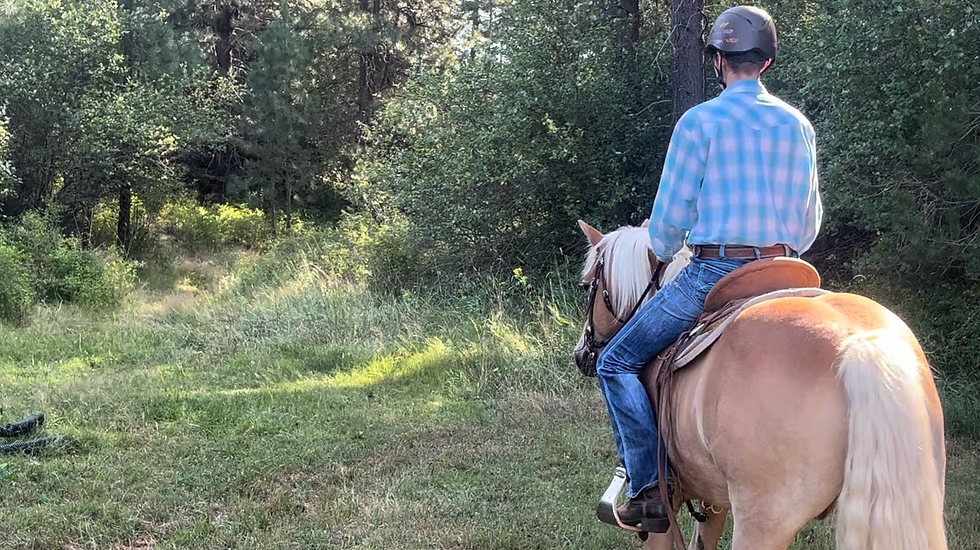
Emotional training was the aspect of training I was most skeptical about. At first, it sounded a little too out there to me, too "new agey" you might say. But my opinion changed as I began to understand what emotional training really is. When we are developing a horse emotionally, we are going to use stress and recovery to enlarge our horse's comfort zone. Horses need to be able to handle stress to a certain degree in order for them to be safe and not reactive when we are working with them. This may look like introducing my horse to a scary sensory obstacle (such as a flag on a stick, a spray bottle, or a tarp). It might look like pushing my horse into a faster lope, a hand gallop, or doing quick rollbacks, which adds excitment (a form of emotional stress). I might take my horse on a trail ride which adds a certain level of unpredictablity (you never know when some birds might fly out of the bushes). Jumping, cow work, going away from the barn or herd, are all examples of situations that can grow my horse emotionally. It's my job as the trainer not to overstress the horse to a point where they can't think; I have to find the sweet spot that takes them out of their comfort zone but keeps them engaged with me. And I have to get in that recovery time, that's where the real learning happens. There are so many horses out there that are quick learners and beautiful movers but will jump out of their skin if one tiny thing happens that they weren't expecting. Thats not a fun horse to work with. Emotional training is about getting our horse outside of their bubble and showing them that we will take care of them. It's stepping up as the leader in the ways they need us to.
If we want well-rounded, versatile horses, we have to do the work to develop them physically, mentally, and emotionally. Each horse is an individual and we have to adjust our training process to what that specific horse needs from us. Have questions or want to learn more? Contact me to sign up for a lesson! I'd love to help you and your horse on your journey.


Comments